| Your Local Philadelphia Team |
You are assigned a dedicated Philadelphia property manager and a dedicated leasing agent working out of our Center City office, backed by an in-house accounting team and Pennsylvania-licensed leadership. Once a tenant is placed, your property manager becomes the single point of contact for you and your tenant. |
One person handles leasing calls, bookkeeping, vendor scheduling, and tenant communication — often at the same time, and often after hours. |
| Certificate of Rental Suitability (CRS) — Required at Every Move-In |
Philadelphia requires a Certificate of Rental Suitability, issued by the Department of Licenses and Inspections, before every new tenant moves in. The CRS confirms the property has no open violations and includes the L&I-required Partners for Good Housing handout. We pull the CRS, provide it to the tenant, and maintain the documentation trail required for legal rent collection and eviction. |
You pull the CRS from L&I before every move-in, provide it and the required handout to the tenant, and maintain the documentation. Renting without a valid CRS means you cannot legally collect rent or file eviction actions — a common trap that voids landlord remedies in Municipal Court. |
| Rental License, Water Liens & Recurring L&I Compliance |
Philadelphia requires an active Rental License for every rental unit, and unpaid Philadelphia Water Department bills become liens on the property that can compound into serious title issues. We maintain the Rental License renewal calendar, monitor water-bill status during tenant transitions, and coordinate with L&I on any property violations before they escalate to court. |
You track your Rental License renewal, monitor water-bill status (particularly during tenant transitions where a departing tenant may leave unpaid balances), and manage any L&I violations that arise — where a water-bill lien can survive a sale and follow the property to a future owner. |
| Philadelphia Lead Certification Requirements |
Philadelphia’s Lead Paint Disclosure and Certification Law was expanded to require lead-safe or lead-free certification for all pre-1978 rental properties, not just those where children reside. We coordinate the certified lead inspector, maintain the certification records, and re-certify on the schedule the city requires. |
You determine whether your property falls under the expanded lead certification framework (most pre-1978 rentals in Philly do), hire a city-certified inspector, complete any required remediation, and maintain the certification records. Non-compliance can prevent leasing and expose owners to serious city penalties. |
| Philadelphia Municipal Court Eviction Process |
Philadelphia requires a written notice appropriate to the situation before eviction — commonly a 10-day notice for nonpayment, or a longer notice period for other breaches. Just-cause requirements also apply in many circumstances. We serve the notice, file the eviction in Philadelphia Municipal Court, appear at the hearing, and coordinate the alias writ of possession with the Landlord & Tenant Officer. |
You prepare and serve the correct notice under the applicable timeline, file in Municipal Court, appear in person at the hearing, and coordinate the alias writ execution — while the property earns no income. |
| University Corridor Rental Cycles |
Properties near Penn, Drexel, Temple, Jefferson, and USciences operate on an academic-calendar rental cycle, with peak leasing activity in the spring for August-September move-ins. Student rentals require different screening standards (guarantor documentation is common), higher turnover management, and marketing timed to the academic calendar rather than the general Philadelphia rental market. |
You align listing timing with each university’s academic calendar, collect and verify guarantor documentation for student applicants, and manage the higher turnover volume that comes with student tenancies across multiple institutions. |
| Rowhome Stock & Snow Removal Ordinance |
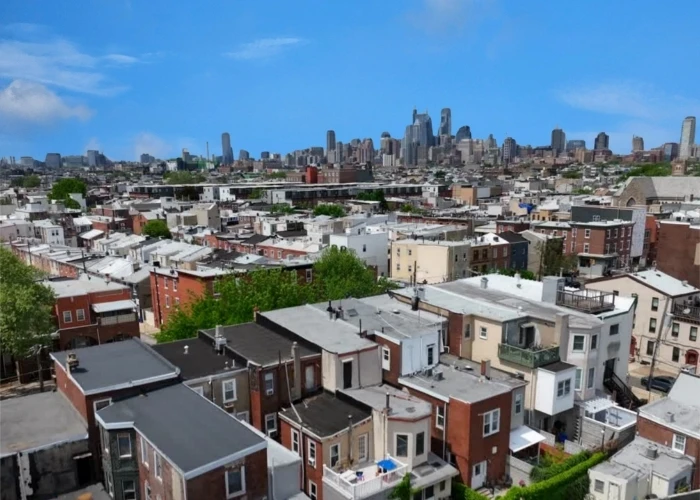
Philadelphia’s rowhome housing stock brings its own maintenance profile — shared party walls, flat roofs, and basements vulnerable during heavy rain events. Philadelphia also requires sidewalk snow removal within six hours of a storm’s end, with fines for non-compliance. We schedule seasonal roof and gutter service, coordinate with adjoining property owners on shared walls, and confirm snow-removal responsibility is clear in every lease. |
You handle the rowhome-specific maintenance calendar, negotiate shared-wall repair costs with neighbors, coordinate roof service across a housing type unfamiliar to owners from single-family markets, and either handle snow removal yourself within the city’s six-hour window or coordinate a vendor to do so — where the fines add up quickly across a snowy winter. |
| Residential Tax Abatement Implications |
Philadelphia’s residential tax abatement program affects investor economics on newer construction and substantially renovated properties, particularly in Fishtown, Northern Liberties, Point Breeze, and other high-development neighborhoods. We help owners understand how the abatement affects rent-setting economics, forward tax planning, and property positioning during the abatement period and afterward. |
You track your property’s tax abatement status, plan for the tax-bill increase when the abatement expires or steps down, and factor abatement remainder into rent-setting and any future sale analysis — an economic layer that most markets don’t require. |
| Fair Housing Commission & Renters Access Act |
Philadelphia has its own Fair Housing Commission with enforcement authority beyond federal and state fair housing law, and the Renters Access Act adds specific protections around source-of-income and criminal-history screening. We structure applicant screening to comply with these city-level frameworks and maintain the documentation the Commission requires if a complaint arises. |
You must design screening criteria that comply with the Philadelphia Fair Housing Commission’s specific interpretation of source-of-income and criminal-history rules — an area where policies routine in other Pennsylvania markets can trigger city-level complaints in Philadelphia. |
| What It Costs |
A management fee ranging from 5% to 8% of collected rent, a leasing fee equal to the first month’s rent, and a lease renewal fee of 10% of one month’s rent. All fees are stated upfront in the management agreement — no surprise assessments and no marked-up maintenance charges. |
No management fee. The real costs live off the fee schedule and get bigger in a city-level compliance environment: L&I fines from a missed CRS or violation, penalties from a lead certification lapse, water-lien exposure that survives a sale, snow-removal fines, and vacancy from an eviction that stalled because the paperwork wasn’t perfect at the Municipal Court hearing. |