
In 2026, something feels different about renting. Bigger doesn’t always mean better anymore, and for many renters, it doesn’t even feel necessary. More people are starting to choose smaller spaces. Renters downsizing is not because they have to, but because it actually makes sense.
Rent hasn’t slowed down much, everyday costs keep shifting, and paying for space you barely use starts to feel like a waste.
So, what’s really driving renters to downsize? And why are more people choosing less space when they could go bigger? Let’s break it down in more detail.
Main Takeaways
- More renters are choosing smaller homes because rent is high, extra space isn’t being used, and flexibility matters more now.
- Downsizing doesn’t always mean a big change. It can be moving to a smaller unit, choosing a better location, or sharing space to cut costs.
- While you save on rent and utilities, you may give up space and certain features, so the goal is to find a place that actually fits how you live.
Why More Renters Are Choosing Smaller Homes in 2026
 Downsizing among renters is becoming more noticeable in today’s housing market. And it’s not driven by just one reason. If you ask experienced property management companies in Baltimore, they will confirm that it’s a mix of small shifts that have slowly added up.
Let’s look at the most common reasons:
- Rent is taking up too much of the monthly income
In many U.S. cities, the gap between unit sizes is hard to ignore. Moving down even one size can free up a few hundred dollars. For that reason, many renters who make that trade-off are starting to feel it’s worth it.
- That extra space isn’t being used the way it was expected
Remote and hybrid work changed how people think about space. At first, having an extra room felt necessary. You might even plan to use it for work, only to realize it sits empty most of the time.
- Flexibility is starting to matter more than square footage
When you live in a smaller home, it’s easier to move or change plans without feeling locked into long-term commitments. For example, you can easily switch neighborhoods, take a new job in a different area, or downshift your expenses without being tied to a larger, more expensive unit.
- Lower rent creates breathing room in other areas of life
Many landlords and property managers use income requirements when screening applicants, often looking for income about three times the monthly rent. And right now, that’s not always easy to keep up with. So choosing a lower rent can take some pressure off and give you more room to handle other expenses.
What Downsizing Looks Like for Renters Today
So, when we talk about downsizing, what does that look like in practice? It doesn’t always mean a big move. Most of the time, it’s small changes that make more sense over time. Let’s look at what that looks like:
What Changes |
What It Looks Like in Real Life |
| Moving to a smaller unit | Going from a two-bedroom to a one-bedroom and realizing the extra room wasn’t being used much |
| Choosing location over size | Picking a smaller place closer to work or school to cut commuting time and costs |
| Sharing space again | Looking for a roommate and giving up living alone to make rent more manageable |
| Focusing on layout, not size | Choosing a well-designed space with open areas and smart storage instead of a larger but less practical unit |
As you can see, the shift isn’t really about going smaller for the sake of it. It’s about choosing a space that fits your lifestyle.
How Much Renters Can Actually Save by Downsizing

Let’s now look at figures. What can you actually save by downsizing?
One, the exact savings depend on the city. In Baltimore, for example, moving from a two-bedroom to a one-bedroom can save you around $300 to $450 per month. And that’s just rent.
Utilities are another place where you start to see savings. Still in Baltimore, moving from a two-bedroom to a one-bedroom can lower your utility costs by around $50 to $100 each month.
That’s because you’re using less space. And of course, heating and cooling a smaller area costs less, and even things like lighting and furnishing don’t add up the same way.
What Renters Are Giving Up for Lower Rent
Of course, downsizing comes with trade-offs.
The most obvious trade-off is space. If you move from a two-bedroom to a one-bedroom, you’ll have less room for storage, fewer separate areas, and sometimes less privacy. If you’re sharing the place, it can start to feel a bit crowded.
Another thing you might be giving up is certain features. That extra bathroom, a larger kitchen, or even things like in-unit laundry can disappear as you move into smaller or more affordable units.
Still, there’s the mental side of it. Living in a smaller space means being more intentional about what you keep and how you use your environment. Not everyone enjoys that adjustment.
How Renters Are Making Smaller Spaces Work
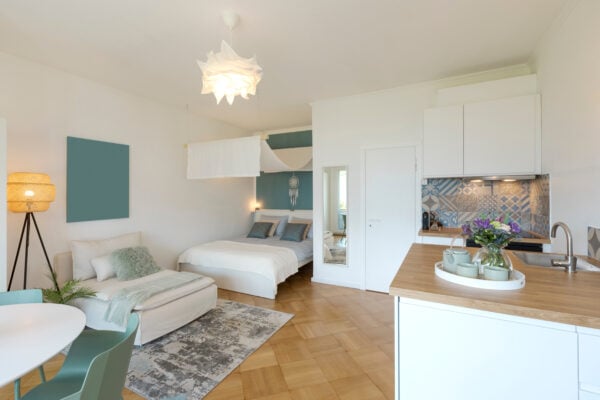 Renters aren’t just moving into smaller homes but rather adapting how they live in them. And that shift starts with how the space is set up.
First, furniture is becoming more functional. For example, foldable tables and other items that serve more than one purpose—such as shelves and storage beds—are becoming more common. Layout matters more, too. Even small adjustments can make a space feel completely different.
Storage has also become more intentional. Instead of filling space, renters are organizing it in ways that actually make daily life easier.
Also, beyond the physical setup, there’s a mindset shift happening. Smaller living is pushing people to focus on what they really use and what actually adds value to their routine.
Is Downsizing the Right Move for You?
It depends on what you’re trying to solve. For instance, if your goal is to reduce monthly expenses or create more financial breathing room, downsizing can make a lot of sense. It’s one of the more direct ways to lower your cost of living without changing everything else.
However, if space is something you rely on—whether for work, family, or comfort—the decision may not be as straightforward. The key is to look at how you actually live day to day. Not what you think you need, but what you consistently use. Because at the end of the day, downsizing isn’t just about moving into a smaller place. It’s about choosing a space that fits your current life better.
Find a Rental That Fits Your Life (Not Just Your Budget)
Downsizing can make a lot of sense, but only if the space you choose actually works for you. It’s not just about paying less rent but finding a place that fits your routine, your priorities, and how you live daily.
And sometimes that’s not always easy to figure out on your own.
At Bay Property Management Group, we work with renters across Baltimore and other states to help them find homes that make sense for their current situation. So, whether you’re looking for a smaller space, a better location, or something that balances both, we are here to help.
Take a look at our current listings and see what’s available. We are here to help you find a space that fits your lifestyle.
