
If you own rental property, you likely know that depreciation reduces taxable income. But what is accelerated depreciation in real estate?
It is a tax method that lets you deduct certain rental property costs earlier instead of waiting many years to recover them. This is different from the standard depreciation timeline of 27.5 years. So, how does it work? Keep reading as we break down what it means and how it can impact your rental income.
Main Takeaways
- Accelerated depreciation lets you recover certain rental property costs faster. That means you deduct shorter-life components earlier instead of spreading everything evenly over decades.
- It does not increase your total deduction. It simply changes the timing, which can improve early cash flow and reduce taxable income sooner.
- It differs from bonus depreciation and Section 179. That may allow larger or immediate first-year deductions but come with different rules and limits.
What Is Accelerated Depreciation in Real Estate?
 Accelerated depreciation is a way for real estate investors to claim tax deductions more quickly. In our experience in Philadelphia property management, we see how strategies like this can directly improve your return on investment. And honestly, tax timing matters. If you can claim deductions sooner, that can greatly improve your cash flow and potentially increase your tax savings.
So, how does accelerated depreciation actually work in real life?
Let’s say John buys a rental property in January 2026. Under IRS rules, residential property must be depreciated over 27.5 years. That means he deducts small portions of the property’s value each year until 2053.
Now, part of that property may include items like appliances, flooring, or lighting. Those items do not last 27.5 years. They wear out sooner. Sometimes in 5, 7, or even 15 years.
That is where accelerated depreciation in real estate comes in.
It allows you to deduct those shorter-life items earlier. As a result, you claim larger deductions in the early years instead of waiting nearly three decades.
How Accelerated Depreciation Normally Works in Real Estate
When we talk about accelerated depreciation, we mean deducting certain parts of your rental property sooner instead of treating the entire property as one single asset. A rental is not just one thing. It has flooring, appliances, cabinets, wiring, and even landscaping. Some of those parts wear out faster than others.
Accelerated depreciation allows you to write off those shorter-life items earlier. In plain terms, you get your tax benefit faster rather than spreading everything out evenly in 27.5 years.
Example: $20,000 in Appliances and Flooring
 Let’s say you own a rental property in Philadelphia and you install $20,000 worth of appliances and flooring.
That includes $12,000 in appliances and $8,000 in flooring. Under standard building depreciation, that $20,000 would be spread over 27.5 years. That comes out to about $727 per year.
Now let’s look at accelerated depreciation.
Appliances are usually classified as 5-year property. Carpet typically qualifies as 5-year property, while other flooring types may qualify depending on how they are installed and classified. So, for a 5-year property, the IRS allows a 20% deduction in Year 1.
- So in the first year, you deduct:
20% of $20,000 = $4,000.
- In Year 2, the rate typically increases to 32%.
That gives you:
32% of $20,000 = $6,400.
Now pause there. In just two years, you have deducted $10,400. But under the normal 27.5-year schedule, you would have deducted only about $1,454 over those same two years. That is a good amount, especially if you are just starting out and trying to build momentum.
Note: Actual depreciation schedules depend on asset classification and current tax rules.
Accelerated Depreciation vs Bonus Depreciation vs Section 179
When you look at accelerated depreciation, it is easy to confuse it with bonus depreciation. And sometimes even with Section 179.
So let’s break them down side by side. That way, you can see the differences clearly and decide which approach may work best for your rental property.
Here’s a simple comparison table.
Feature |
Accelerated Depreciation |
Bonus Depreciation |
Section 179 |
| What it does | Speeds up deductions by separating shorter-life parts of a property | Allows a large percentage of qualifying assets to be deducted in year one | Lets you deduct the full cost of certain qualifying assets in year one |
| Timing | Deductions are spread over fewer years | Large portion deducted immediately | Full deduction taken immediately (up to annual limits) |
| Applies to | Specific components of a property (like flooring, appliances, fixtures) | Qualifying new or used property | Tangible personal property used for business |
| Limits | No specific dollar cap, but depends on asset classification | Percentage changes based on tax law | Subject to annual dollar limits and income limits |
| Best for | Investors who want larger early deductions but still spread over time | Investors who want strong first-year tax reduction | Small business owners who want immediate expense deduction |
As you can see, each method works differently when it comes to timing. Accelerated depreciation spreads deductions over fewer years. Bonus depreciation moves a large portion into the first year. Section 179, on the other hand, lets you write off certain assets right away. However, it’s important to remember that Section 179 is generally more limited for residential rental property and is more commonly used for business equipment or certain commercial property.
What Property Types Qualify for Accelerated Depreciation?
If you own income-producing property, you may qualify for accelerated depreciation. Please note that the property must be used for business or investment purposes. Personal residences do not qualify.
So, what properties qualify? Let’s look at it in a table below:
Property Type |
Can It Qualify? |
| Single-family rental | Yes |
| Duplex or triplex | Yes |
| Apartment building | Yes |
| Commercial property (office, retail, warehouse) | Yes |
| Mixed-use property | Yes (business portion only) |
| Primary residence | No |
| Land only | No |
What Can Be Depreciated Faster? (Interior & Exterior)
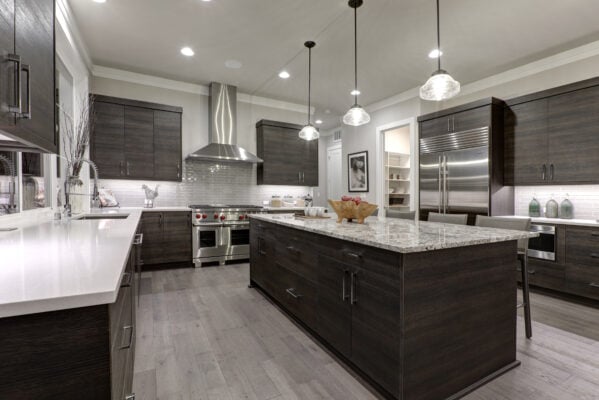 When people hear accelerated depreciation, they often think it applies to the entire building. It does not. What usually qualifies are specific parts of the property that wear out faster than the structure itself. So before we list them out, keep this in mind: we are talking about components, not the whole building.
Interior Items That May Qualify
Inside your rental, certain features tend to wear out long before the structure does. These often include:
- Appliances
- Carpet and some types of flooring
- Cabinets
- Countertops
- Light fixtures
- Window treatments
- Plumbing fixtures
Because these items are not part of the structural framework, they may qualify for shorter recovery periods.
Exterior Improvements That May Qualify
The outside of your property can also include components that depreciate faster. In many cases, these improvements stand apart from the main building. Examples include:
- Landscaping
- Fencing
- Walkways and sidewalks
- Parking lots
- Outdoor lighting
- Detached storage units
The structure itself stays on the standard schedule. But many interior and exterior improvements may move on to a shorter one.
Turn Smart Tax Strategy Into Stronger Returns Today!
From the discussion, you can see that accelerated depreciation can make a meaningful difference in how your rental property performs financially. By recovering certain costs sooner, you improve early cash flow and gain more flexibility in how you reinvest or manage your property.
At Bay Property Management Group, we work with rental property owners across Philadelphia to help them protect and grow their returns. While tax planning ultimately involves your CPA, strong property management supports the bigger picture. That is, from maintaining your property to improving operational efficiency. Contact us today and let’s help your investment stay profitable and well-positioned for long-term success.
